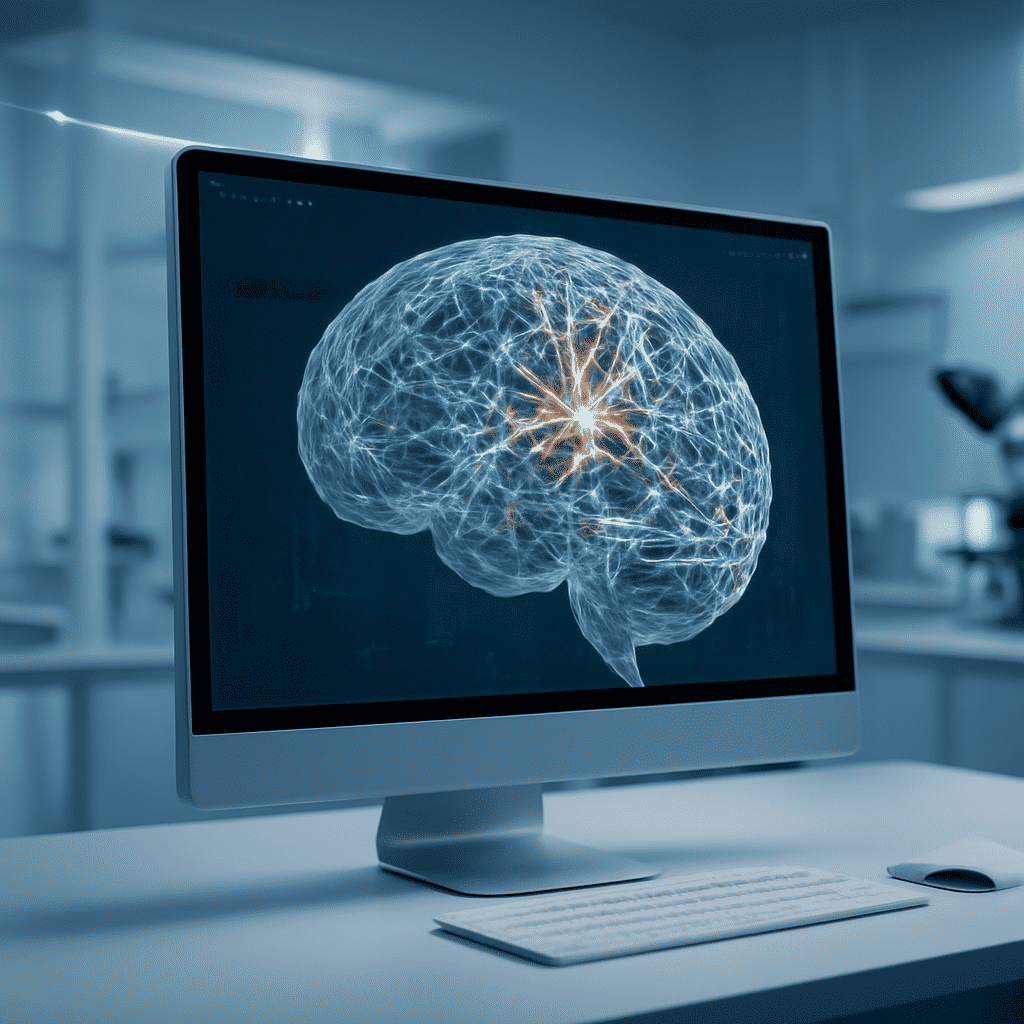
The human brain, an intricate web of neurons and synapses, has long fascinated scientists seeking to understand the mysteries of cognition, consciousness, and mental health. With advancements in technology, particularly artificial intelligence (AI), researchers are now making significant strides in mapping this complex organ. The integration of AI in neuroscience is ushering in a new era of exploration and understanding, potentially transforming diagnostic and therapeutic approaches to neurological disorders.
Traditionally, brain mapping involved laborious manual techniques, often limited in scope and resolution. However, AI's ability to analyze massive datasets quickly and efficiently has revolutionized this field. Machine learning algorithms, a subset of AI, are now employed to decode patterns within brain imaging data, revealing insights that were previously unattainable. These algorithms have the capacity to detect subtle changes in brain structure and function, leading to a more detailed and dynamic understanding of neural networks.
One of the most significant impacts of AI in neuroscience is its role in enhancing imaging technologies such as magnetic resonance imaging (MRI) and positron emission tomography (PET). By employing AI algorithms, researchers can now achieve unprecedented precision in structural and functional brain imaging. For instance, AI-enhanced MRI scans can better differentiate between healthy and diseased tissue, providing clearer insights into conditions such as Alzheimer's disease, schizophrenia, and multiple sclerosis.
Moreover, AI facilitates the integration of multimodal data—from genetics to behavior—with brain imaging. This comprehensive approach allows researchers to construct more accurate models of brain function. For instance, by integrating genetic data, AI can identify biomarkers associated with diseases, paving the way for personalized medicine. This fusion of data types helps scientists understand how genetic variations impact brain physiology and, consequently, cognition and behavior.
AI is also pivotal in understanding the dynamic nature of the brain. Neuroscientists can utilize AI to analyze the brain's activity over time, offering a real-time perspective on how different regions of the brain interact. This temporal analysis is crucial for studying neuroplasticity—the brain's ability to reorganize itself by forming new neural connections. AI-driven models provide insights into how these changes relate to learning, memory, and recovery from brain injuries.
Beyond mapping, AI is actively contributing to the development of therapies for neurological disorders. By predicting disease progression and treatment outcomes, AI models can guide the creation of targeted interventions. In the realm of mental health, for example, AI can analyze speech patterns and biometrics to aid in the early detection of disorders like depression and anxiety, potentially improving patient outcomes through timely intervention.
Despite its promise, the application of AI in neuroscience presents ethical and technical challenges. Concerns around data privacy, algorithmic bias, and the interpretability of AI models must be addressed to ensure responsible progress. Moreover, the need for vast amounts of quality data to train AI models necessitates collaborative efforts between institutions worldwide.
In conclusion, AI's integration into neuroscience heralds a transformative chapter in brain research. By illuminating the complexities of the human brain with unprecedented clarity, AI not only enhances our understanding of fundamental cognitive processes but also advances the development of therapies for a range of neurological disorders. As technology continues to evolve, the synergy between AI and neuroscience promises to unlock the enigmatic intricacies of the brain, offering hope for better mental health and cognitive well-being.